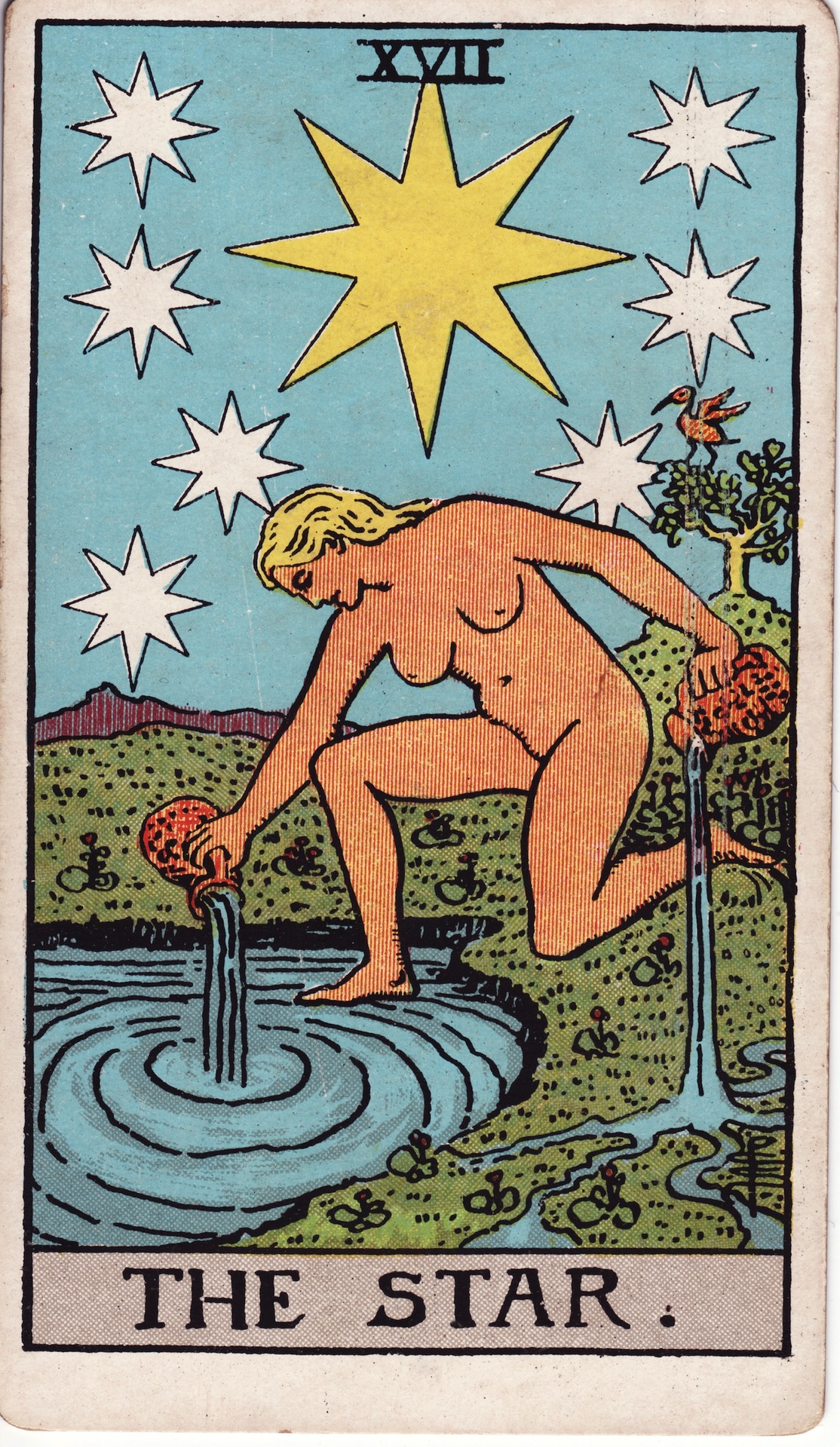
 The Star
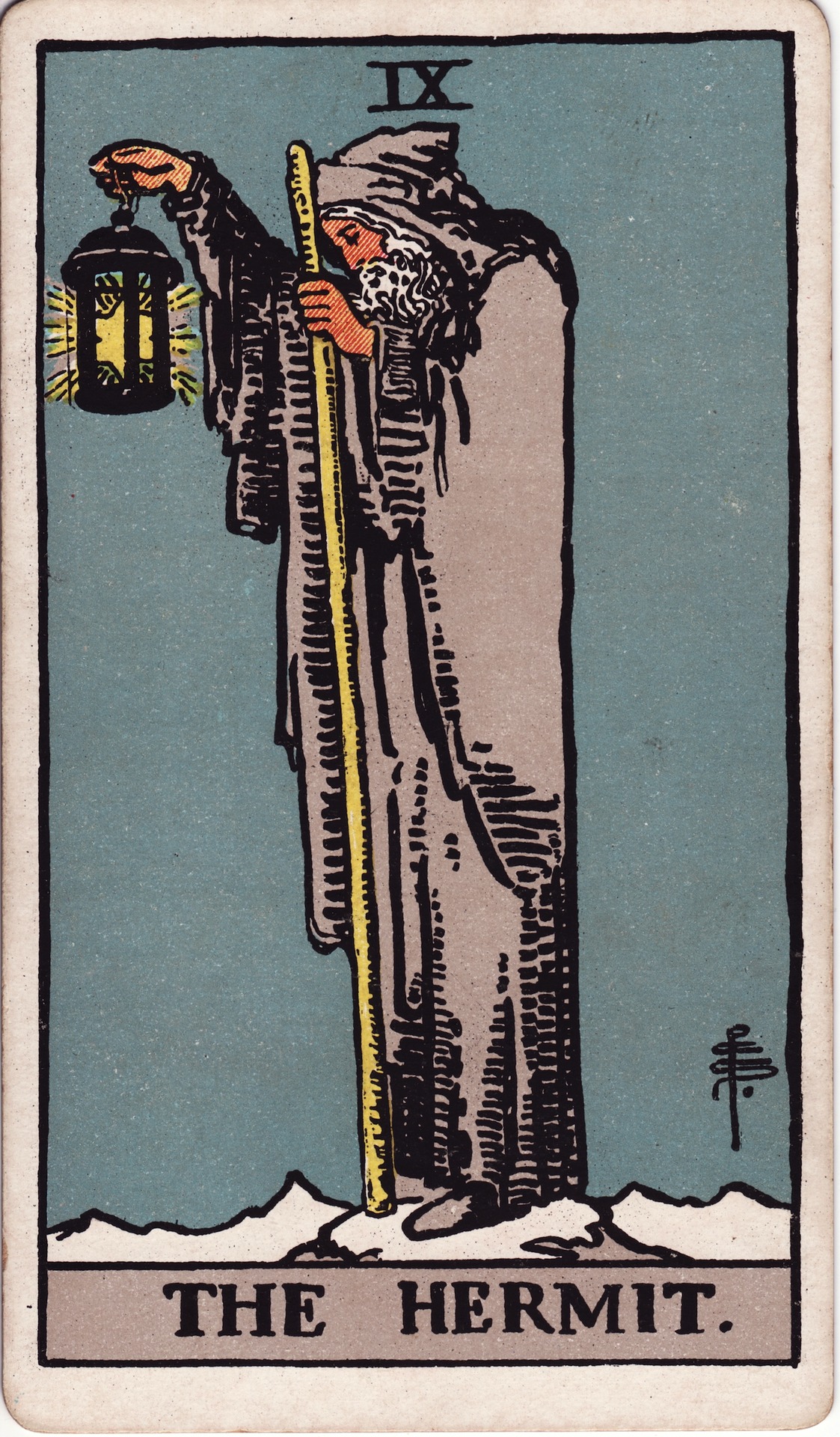 The Hermit
Why a postponed decision stays postponed
Most decisions that drag on are not short of information. They are short of a clear question. “Should I move?” hides three separate things: what you want, what you fear, and what you are not allowed to say out loud because it sounds ungrateful or unrealistic.
Tarot cannot tell you which option is correct. It can give you a fixed set of prompts that make you say what you already half-know. That is the whole value of a decision reading: it moves the weighing from your head to the table, where you can look at it.
Before you draw, write the options as plainly as you can. Two is ideal. “Stay in this flat” and “move closer to my sister” is a decision. “Change my life” is not.
Questions that lead to a next step
Use one main question. The cards answer the question you actually asked, so a vague question gives a vague reading.
- What am I protecting by not deciding?
- What would I have to give up with each option?
- Which fear is realistic and which one is old?
- What do I already know that I keep re-checking?
- What is the smallest reversible step toward option A? Toward option B?
- Who would I need to talk to before this feels real?
A three-position decision spread
Keep the spread small. Three cards are enough: one for what pulls you toward the change, one for what holds you where you are, and one for the step that makes the choice concrete. Assign the positions before you draw, so a dramatic card cannot rewrite the question.
Read each card in its position only. The Tower in the “what holds you” position is a prompt about what feels unsafe to lose, not a forecast of collapse. Write one sentence per card and one alternative reading for each.
- Pull: what draws me toward the change?
- Hold: what keeps me where I am?
- Step: what bounded action makes the choice real this week?
Example: a job offer in another city
This is a fictional example, not a customer result. Imagine someone with an offer in another city who has reread the offer letter eleven times. Their question becomes: “What am I weighing, and what one step would make this decision concrete?”
The Six of Wands in the pull position prompts a note about recognition: the offer is a vote of confidence they have waited for. The Four of Pentacles in the hold position prompts a different note: the current flat, the current routine, the savings plan. The Ace of Swords in the step position suggests a conversation rather than a spreadsheet.
The step they write down is small: ask the hiring manager for a two-day visit before answering, and tell one friend the real reason they hesitate. Neither action commits them. Both make the next week different from the last eleven.
What to do after the reading
Give the step a date. A decision reading without a dated step turns into another thing to reread. Write the date on the same page as the cards.
When the date comes, record what happened, including anything that contradicted the reading. If the decision is still open afterwards, the question has probably changed; ask the new question rather than repeating the old one.
Stop if the reading starts to feel like permission to avoid a conversation with a real person. Tarot is for reflection and entertainment; a decision about work, money, housing or health needs the actual facts and, where it matters, qualified advice.
Common questions
Can a tarot reading tell me which option to choose?
No. It can structure how you weigh the options and surface what you are avoiding. The choice, and the information it needs, stay yours.
What if the cards point to the option I do not want?
Write that down as a prompt, not an instruction. A card that argues for the option you resist often shows what you have not let yourself say about it.
How many times should I draw for the same decision?
Once, then act on the step. If nothing has changed by the date you set, ask a different question rather than repeating the first.
See the report example
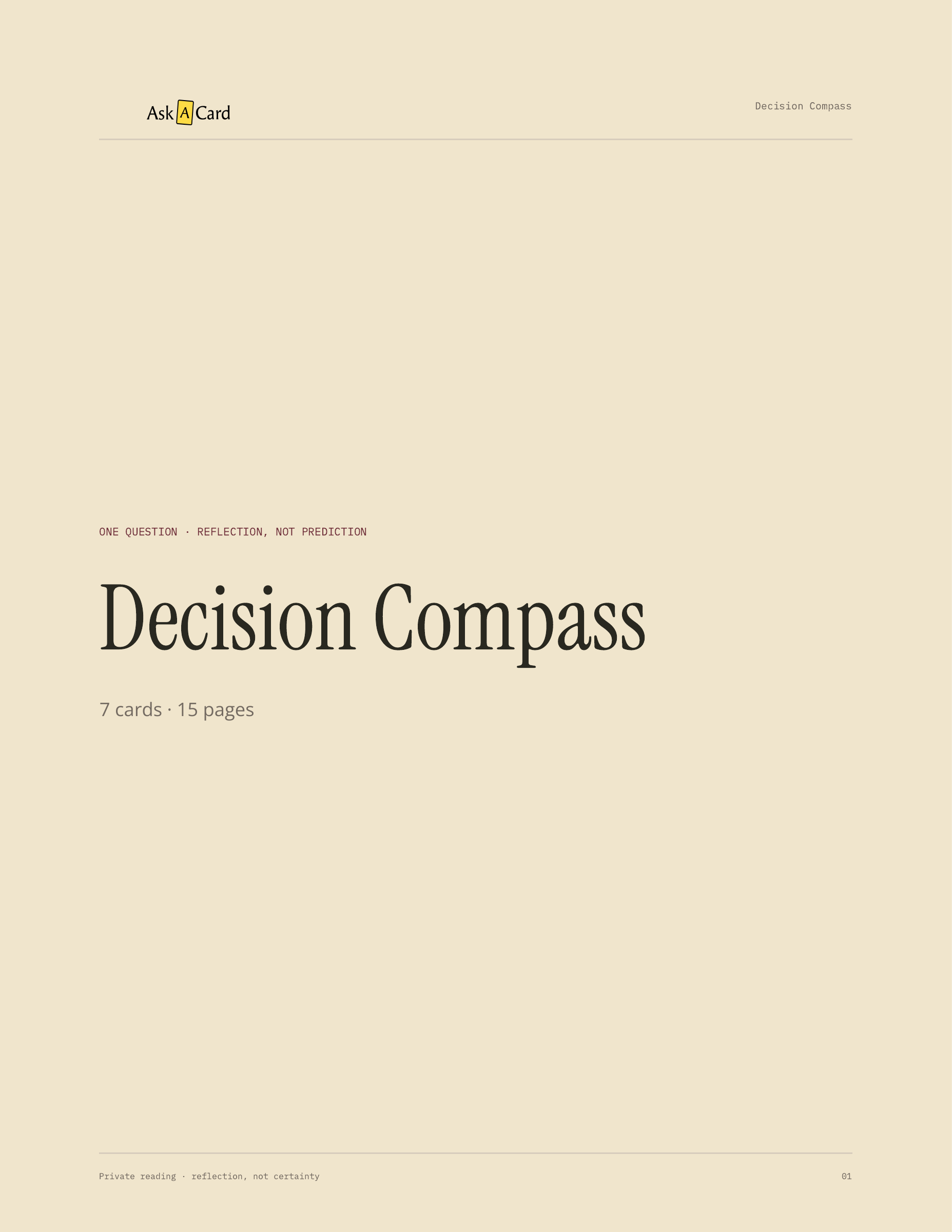
Decision Compass: 7 cards, 15-page PDF. In preparation · planned $12.99 USD; checkout closed.
Continue reading
Method: symbolic reflection. Examples are fictional and interpretations are possibilities, not verified predictions. Tarot is for reflection and entertainment, not professional advice.