A tarot journal is a record of your questions, cards, interpretations, and later observations. Its purpose is not to prove that every reading was “right.” It helps you notice patterns in how you ask questions, make decisions, and understand symbols over time.
Why keep a tarot journal?
A reading can feel vivid in the moment and become difficult to remember a week later. Writing it down creates a baseline. When you return, you can separate what the card actually prompted from what you later added to the story.
- Build your own relationship with card meanings.
- Notice repeated questions, cards, and emotional patterns.
- Compare your first interpretation with what happened later.
- Turn a reading into one small action instead of another draw.
A seven-part journal method
- Date and context. Add only the details you will need to understand the entry later.
- Your question. Prefer an open question about what you can notice or influence.
- The card. Record the name, orientation, and spread position if you used one.
- First response. Write what you noticed before checking a guidebook.
- Reference meaning. Add a short conventional meaning and name the source if helpful.
- One next step. Choose a small action, conversation, or observation.
- Hindsight. Return after a useful interval and write what changed.
Tarot journal entry template
Your own notes · No account
Make an entry here
Notes stay in this browser unless you download or share them. Saving is optional and replaces your previous saved entry. This is not encrypted storage: avoid sensitive details, especially on shared devices. Unsaved notes disappear when you leave.
A short example
Question: What should I notice before I accept this new role?
Card: Eight of Pentacles, upright.
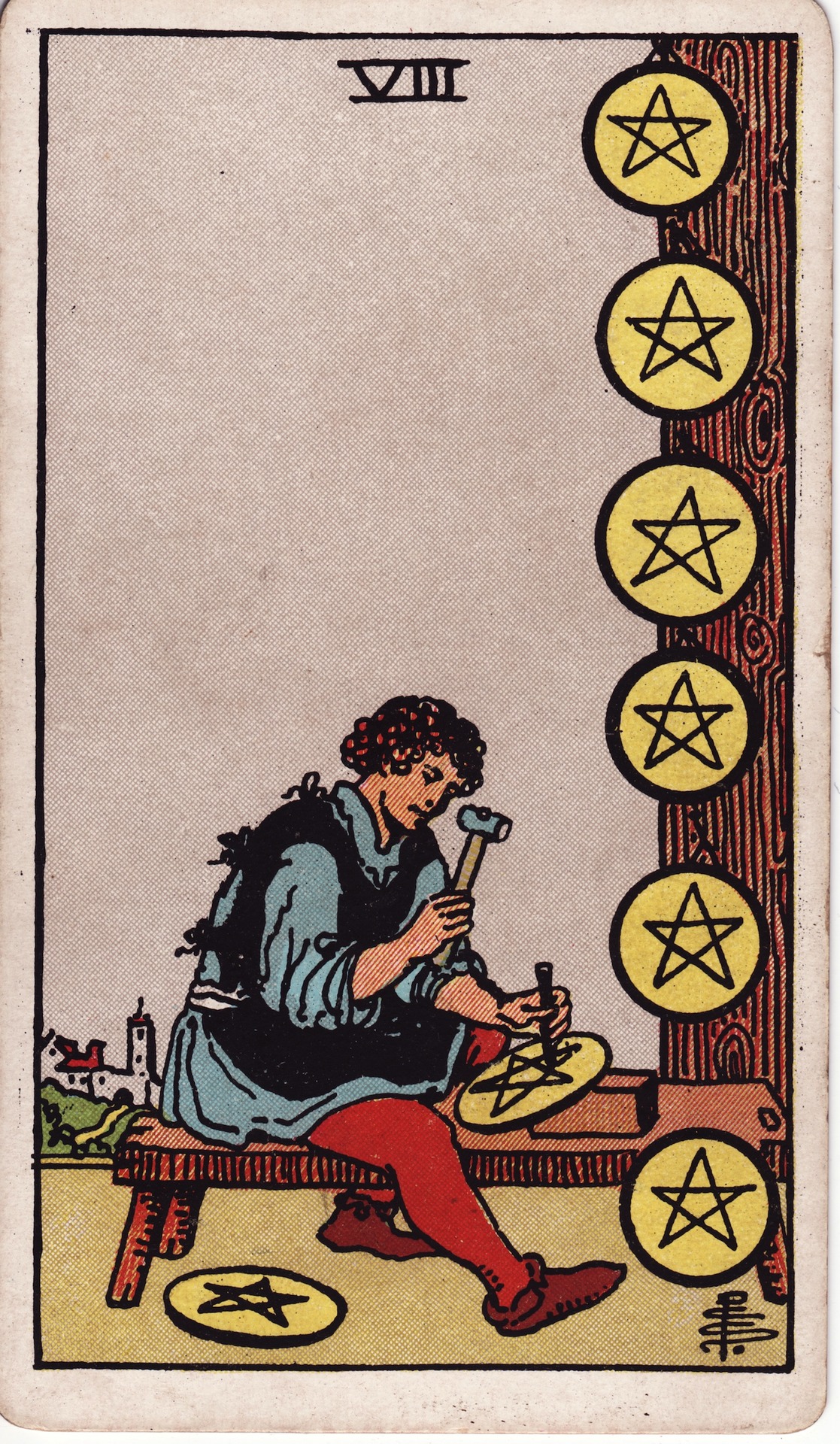 Eight of Pentacles
First response: I notice repetition and focused practice. I am excited by the title, but I have not asked what the everyday work looks like.
One next step: Ask the hiring manager what a normal week includes and how the role is evaluated after six months.
Hindsight: The additional conversation revealed that most of the role was work I wanted to do. It also exposed one responsibility that needed clarification before I signed.
Prompts that keep the entry grounded
- What part of the image did I notice first?
- What fact does this card make me want to check?
- What am I assuming about another person?
- What is within my control this week?
- What would I advise a friend in the same situation?
- What outcome am I afraid to name?
- What would count as new evidence?
Common mistakes to avoid
Writing only the guidebook meaning
A copied definition gives you reference material, but not a record of your thinking. Write your first response before you look anything up.
Drawing until you like the answer
If a card feels confusing, note the confusion. Repeated draws can replace reflection with reassurance-seeking.
Never returning to the entry
The hindsight note is where the journal becomes genuinely useful. Pick a return date: tomorrow, next week, or after the decision is made.
Frequently asked questions
What should I write in a tarot journal?
Record the date, your question, the card and orientation, your first reaction, a possible real-life connection, one next step, and a later follow-up.
Do I need to journal every day?
No. A consistent weekly entry or a note when you have a real question is more useful than a daily habit you cannot maintain.
Should I copy meanings from a guidebook?
You can note a short reference meaning, but keep it separate from your own first response. This helps you see what came from the source and what came from your situation.
Can I keep a tarot journal digitally?
Yes. Paper, a notes app, or a private database can all work. Choose the format you will actually revisit.
Make your first entry
For a focused question, explore our career, relationship, year-end and seven-day reflection guides. Each includes a free method you can try before considering a paid reading.
You can start without buying a deck or creating an account. Draw one card, copy the template, and return to the note later.