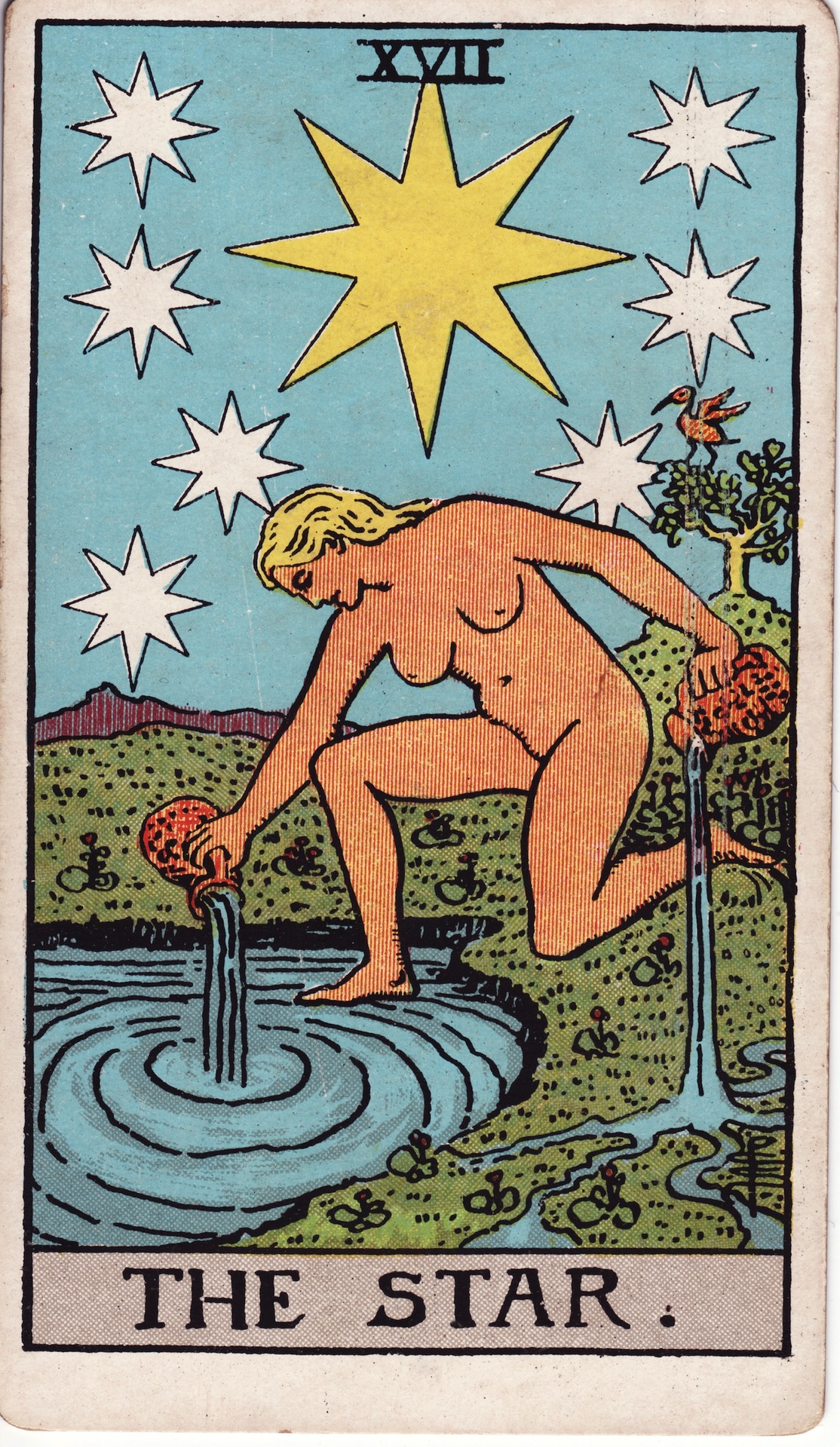
 The Star
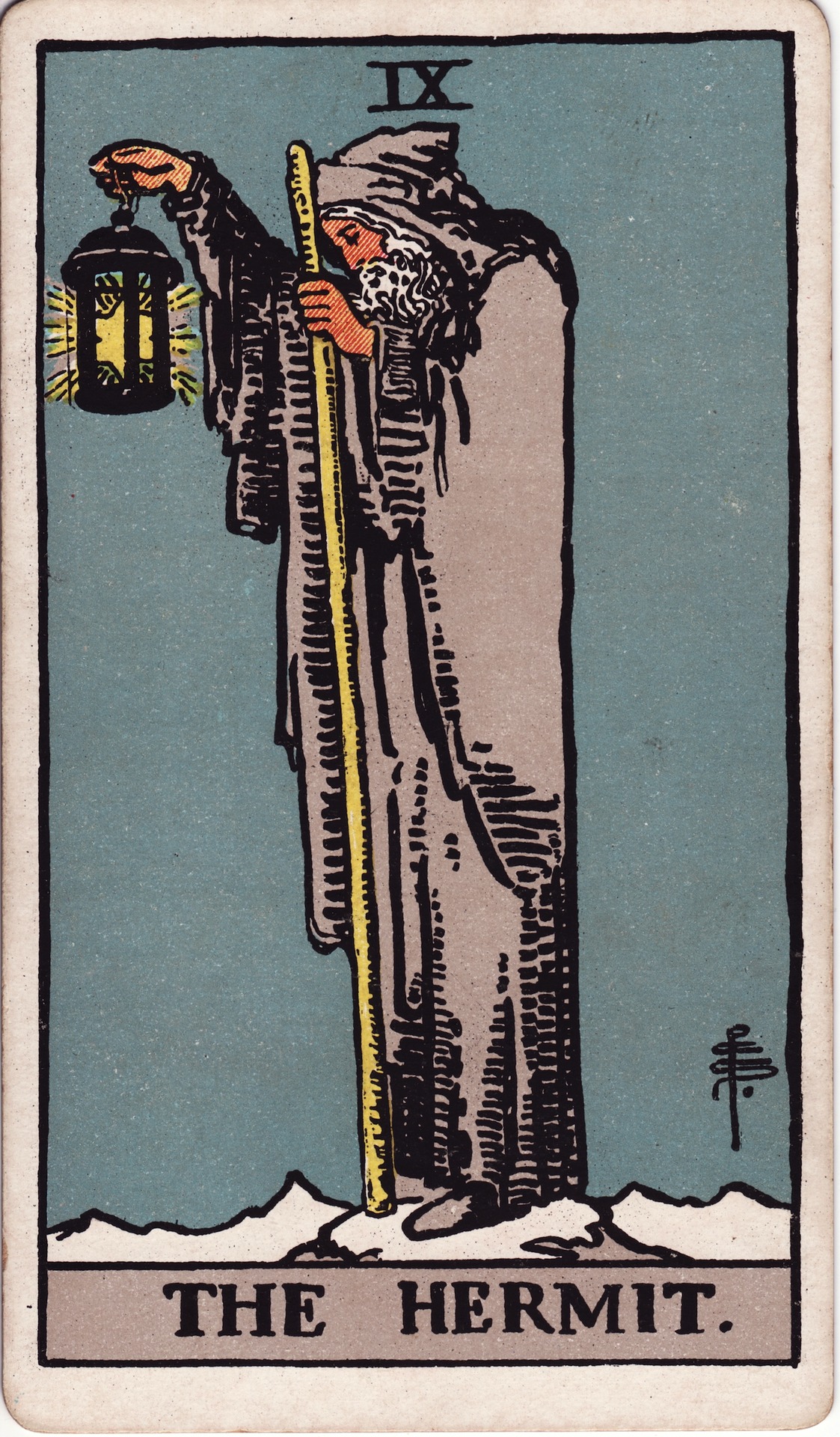 The Hermit
A map, not a calendar
The year-ahead spread is the one most likely to be read as prophecy, and the one that benefits most from being read as a map. Twelve cards cannot know what the year holds. They can give you a different lens for each month, and a page you return to.
Decide the year’s question first. “What do I want this year to be about?” is enough. If there is one thread you already know matters, a move, a project, a relationship, name it; the months will read against it.
Laying the thirteen cards
Place a theme card in the centre and twelve cards around it, January at the top and clockwise. Read the theme first and keep it short. Then read each month in its position only; a Tower in August is a prompt for what might need rebuilding, not an appointment with disaster.
Write one line per month: the card, the theme in your own words, one intention. Thirteen lines on one page. Photograph the layout if you like, but the page of lines is the part you will use.
- Centre: the year’s theme
- Months 1-3: what to begin
- Months 4-6: what to build
- Months 7-9: what to test or release
- Months 10-12: what to finish and carry forward
Example: a year of starting something small
A fictional example. Someone who wants to start a small side project draws the Magician as the theme, the Ace of Pentacles for January, the Hanged Man for April and the Ten of Pentacles for December, among others.
Their notes: the year is about using tools they already have (Magician); January is for the first small concrete step (Ace of Pentacles); April may ask for patience when progress stalls (Hanged Man); December is for looking at what was built rather than what was planned (Ten of Pentacles). None of it says the project will succeed. All of it shapes how they treat each quarter.
Two check-in dates
Set two dates: the end of June and the end of the year. On each, add a line under each month that has passed: what actually happened, whether the theme fit, what you would not have noticed without the card. Keep the lines that did not fit; they are the most honest part of the record.
Do not re-lay the spread mid-year. If the year changes course, write the change under the month it happened and keep reading forward from the original cards.
Where the spread ends
The year-ahead spread is for reflection and for the pleasure of a ritual at a turning point. It does not know your finances, your health or other people’s choices, and it should not decide anything that needs real information or qualified advice.
The Year Ahead reflection below is this spread done for you: twelve monthly pages interpreted against your own question, with check-in prompts built in. It is a companion for the year, not a prediction of it.
Common questions
When is the best time to do a year-ahead spread?
Any turning point: the new year, a birthday, the start of a season. The calendar date matters less than having a question you actually want to carry for twelve months.
What if one month’s card is frightening?
Read it as a quality of attention for that month, write an alternative interpretation, and leave it. The check-in will show you what it actually meant.
Can I redo the spread if I do not like it?
You can, but the first draw usually becomes more useful at the check-ins than a prettier second one. Keep the first page.
Explore the matching reading
The Year Ahead: personalized PDF. Explore the sample and confirm the edition, final price and delivery on Etsy.
Continue reading
Method: symbolic reflection. Examples are fictional and interpretations are possibilities, not verified predictions. Tarot is for reflection and entertainment, not professional advice.