
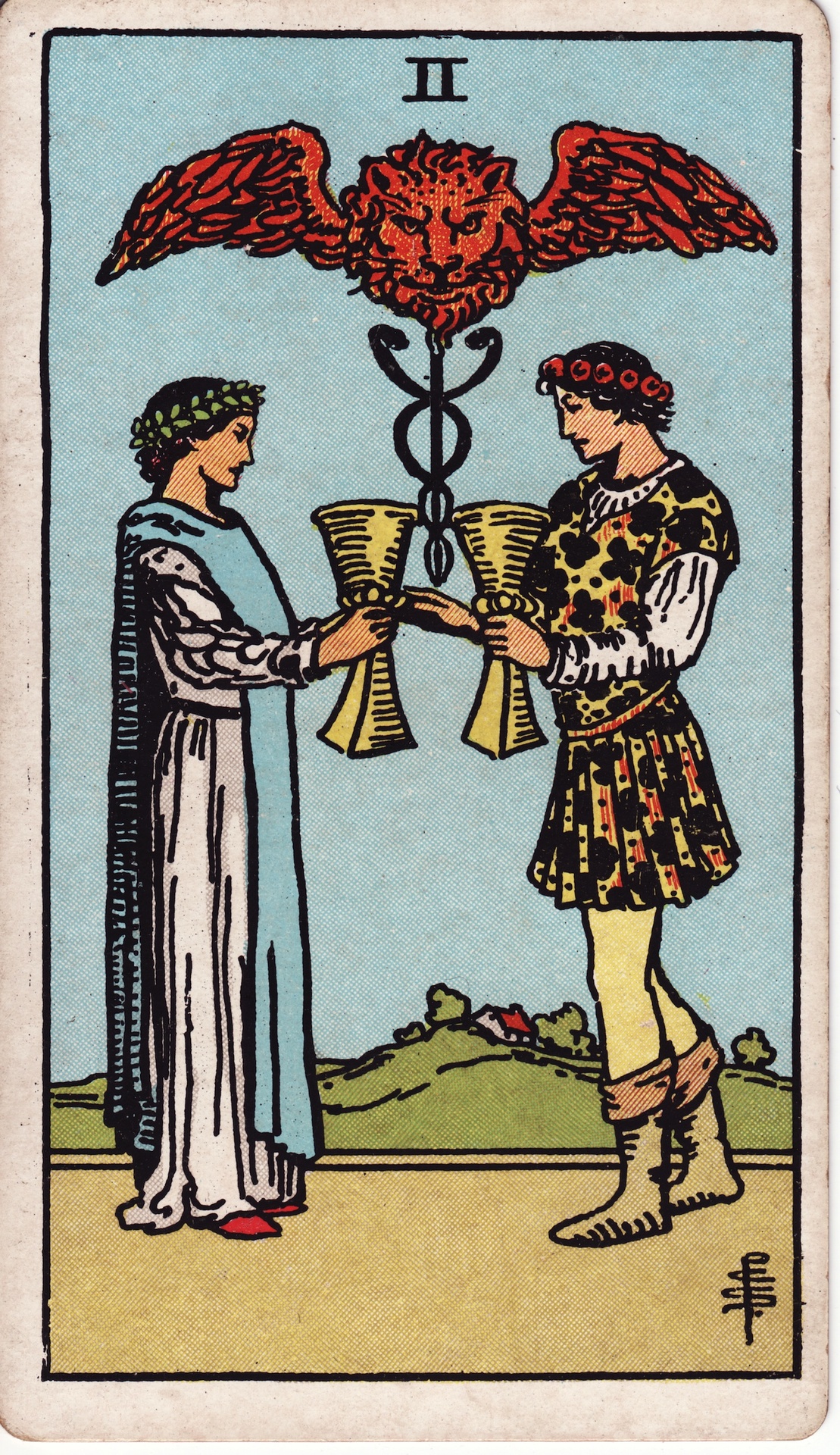
 Two of Cups
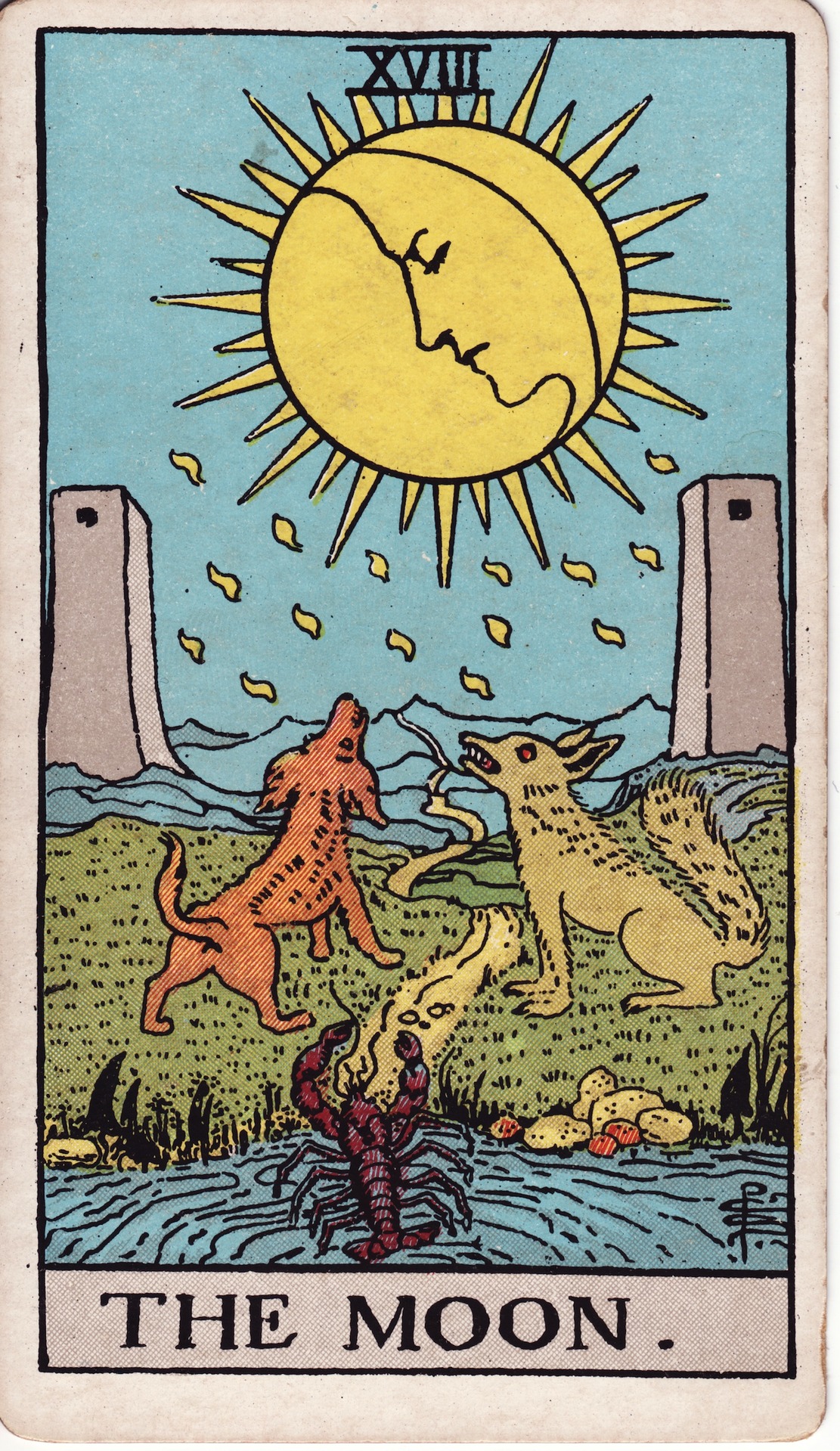 The Moon
The question that never works
“Does he like me?” is the most common relationship question and the least answerable one. A card cannot read another person’s mind, and a reading that pretends to will keep you drawing for weeks while nothing changes.
The question that works is about you: what the hot-and-cold pattern does to your attention, what you tolerate because you hope, and what you would need to hear to stop guessing.
Questions worth asking
Pick one. These are about your side of the situation, which is the only side a reading can touch.
- What do I do while I wait for the next message?
- What am I calling patience that might be waiting?
- What have I already noticed and explained away?
- What would I ask this person if I were not afraid of the answer?
- What do I want from this that I have not said?
A three-card spread for mixed signals
Three positions, assigned before you draw: the pattern as you experience it, what it costs you, and the direct thing you could say or ask. Read each card in its position. The Moon in the first position is a prompt about uncertainty you have lived with, not proof of deception.
- The pattern: how the mixed signals land on me
- The cost: what I give up while I wait
- The direct move: what I could say or ask this week
Example: warm all week, silent at weekends
A fictional example. Someone describes a person who texts every evening and disappears every weekend. They draw the Two of Swords, the Five of Pentacles and the Knight of Swords.
Their notes: they are refusing to look at a thing they already see (Two of Swords); the weekends have become something they spend waiting (Five of Pentacles); the direct move is a plain question, asked once, in daylight (Knight of Swords). The question they write is: “I like how we talk in the week. What are weekends about for you?”
The reading did not tell them what the person feels. It told them what to ask, and helped them hear the answer without rehearsing it for a month.
When to stop reading and ask the person
If you have drawn about the same person three times, the cards are not the problem. Ask the person. One direct question will tell you more than thirty cards, and it keeps your side of the story honest.
The Relationship Clarity reading below is built around your question and your pattern, not around guessing another person’s mind. It ends with the conversation you may be avoiding. If the situation involves pressure, fear or control, the conversation is not the next step; support from someone you trust is.
Common questions
Can tarot tell me what someone else feels?
No. It can only work with what you bring to the table. Use it to understand your own pattern and to prepare a direct question.
What if the cards look hopeful?
A hopeful card is a prompt about what you want, not evidence about the other person. Write what you want down and decide whether you have said it to them.
How often should I read about the same person?
Once, then act on the direct move. Repeated readings about one person usually mean the question is being avoided rather than asked.
See the report example
Relationship Clarity: 6 cards, 13-page PDF. In preparation · planned $12.99 USD; checkout closed.
Continue reading
Method: symbolic reflection. Examples are fictional and interpretations are possibilities, not verified predictions. Tarot is for reflection and entertainment, not professional advice.