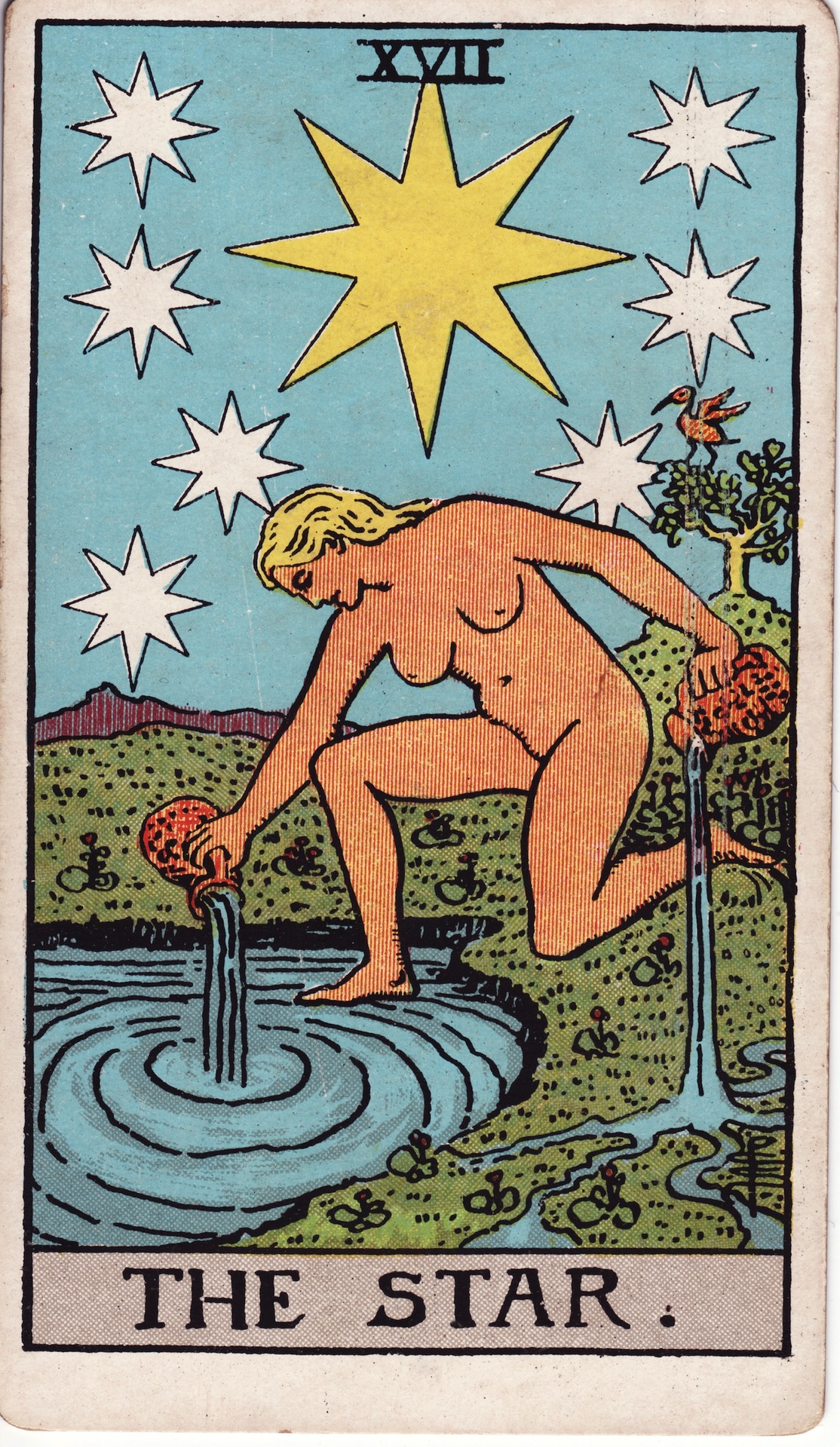
 The Star
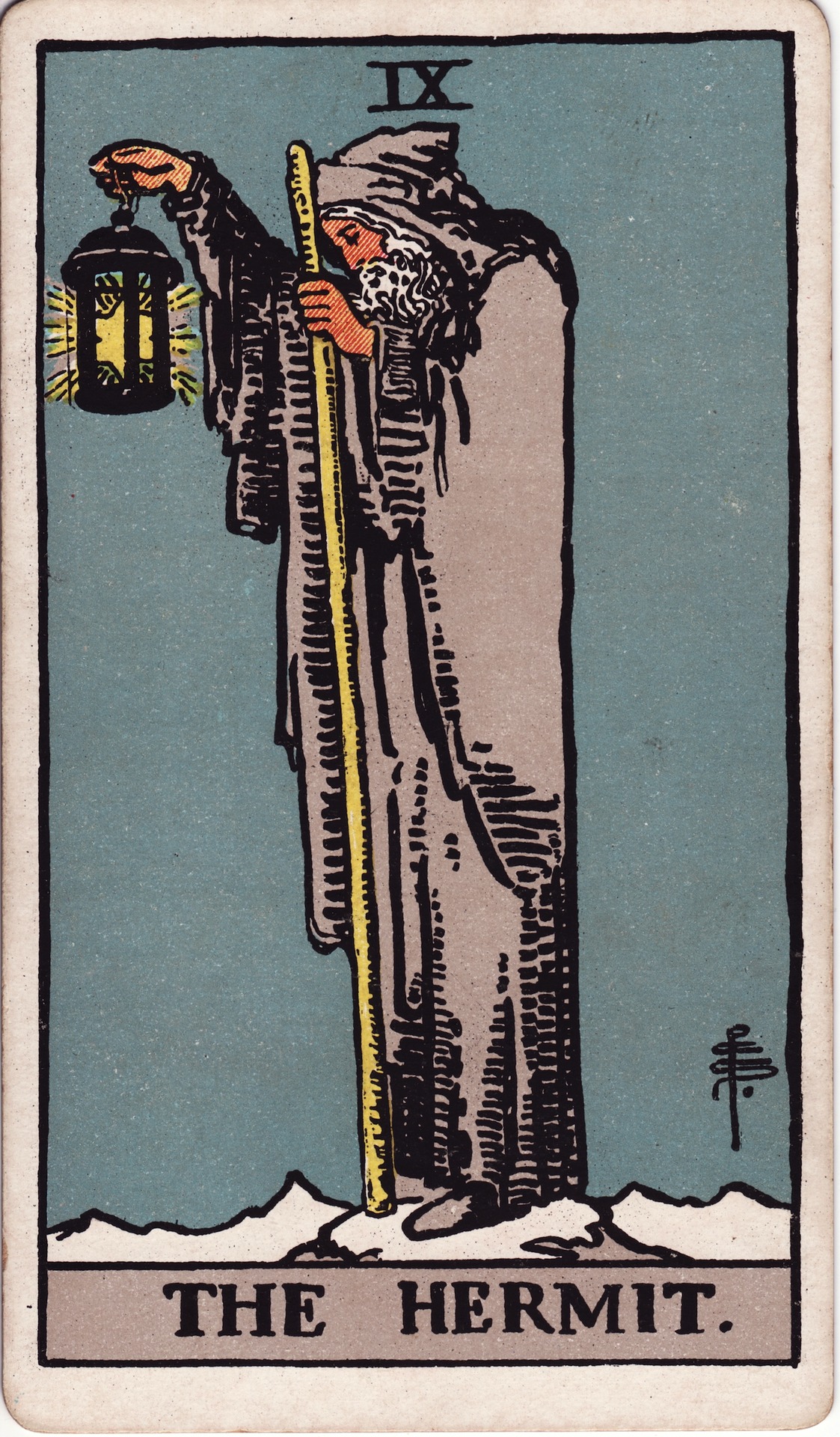 The Hermit
The problem with reading for yourself
When you read for yourself you are the questioner, the reader and the judge. It is easy to draw until the answer you wanted appears, and to read every card as confirmation. The method below is built to make that harder.
You do not need to know all seventy-eight meanings. You need a question, a fixed structure and the discipline to write things down before you decide what they mean.
The method in five steps
Do these in order. The order is most of the method.
- Write the question in one sentence before touching the deck.
- Assign the positions before you draw (three is enough: situation, what I am not seeing, next step).
- Draw once. Lay the cards. Do not reshuffle because a card is ugly.
- For each card write two interpretations: the obvious one and a second that argues with it.
- End with one action that can be checked, and a date.
Why every card gets two interpretations
The second interpretation is the protection against fooling yourself. If the Lovers appears and your first thought is “so we are meant to be”, the second must be something like “or this is about a choice I keep avoiding”. Both go on the page. You decide later which one the week supports.
With practice the second reading becomes the interesting one. It is usually where the thing you did not want to say lives.
Example: reading about a friendship that cooled
A fictional example. Someone asks: “What do I need to see about this friendship before I decide whether to reach out?” Positions: the situation, what I am not seeing, the next step. They draw the Five of Cups, the Six of Cups and the Page of Wands.
Five of Cups: the obvious reading is loss; the second is that three cups are still standing. Six of Cups: the obvious reading is shared past; the second is nostalgia for a version of the friend that may not exist now. Page of Wands: the obvious reading is a message; the second is curiosity without expectation.
The action: send one message about something present, not the past, and do not read the reply as a verdict. Date: this week. What they learn comes from the reply, not the cards.
Mistakes that make self-readings useless
Most of these are about avoiding the question rather than the cards.
- Asking a yes/no question and reading every card as yes.
- Drawing again because the first spread was uncomfortable.
- Reading for another person without their question or consent.
- Using the reading instead of a conversation, a doctor, an adviser or a decision.
- Keeping only the readings that came true.
If you want a second pair of eyes
A self-reading and an outside reading are different tools. The outside reading is useful when you notice you keep drawing about the same thing, or when you want the second interpretation written by someone who is not you.
The Deep Clarity reading below is that: your one question, five positions, each card read two ways, and a next step at the end. It is for reflection and entertainment, not for medical, legal, financial or mental-health decisions. You can always do the method on this page with your own deck first.
Common questions
Do I need to memorise all the card meanings first?
No. Start with a question, fixed positions and two interpretations per card. A guidebook can help with the first interpretation; the second one is yours.
How often should I read for myself?
When you have a new question. Reading daily about the same situation turns into a loop; a seven-day reflection on one saved reading works better.
Reversed cards: yes or no?
Optional. If you use them, decide before you draw and keep the rule for the whole reading. Consistency matters more than the convention.
Explore the matching reading
Deep Clarity: personalized PDF. Explore the sample and confirm the edition, final price and delivery on Etsy.
Continue reading
Method: symbolic reflection. Examples are fictional and interpretations are possibilities, not verified predictions. Tarot is for reflection and entertainment, not professional advice.